(631)-271-3737,
QUEENS
(718)-751-0226
(516)-307-0262,
BROOKLYN
(347)-508-9316,
BOHEMIA
(631)-223-4502
(631)-271-3737,
QUEENS
(718)-751-0226
(516)-307-0262,
BROOKLYN
(347)-508-9316,
BOHEMIA
(631)-223-4502
Cure your mortgage arrears over three to five years and stop the foreclosure sale, with an attorney who files your plan at Central Islip, where your Suffolk case is heard.


Chapter 13 reorganizes debts for individuals.
A Chapter 13 bankruptcy lawyer in Suffolk County builds a court-approved repayment plan that keeps the home a Chapter 7 liquidation cannot.

A Chapter 13 bankruptcy lawyer in Suffolk County builds a court-approved repayment plan, lasting three to five years, that folds your missed mortgage payments into an affordable monthly amount and stops a foreclosure sale so you keep the home. This is the reorganization path, not the Chapter 7 liquidation path: instead of erasing debt fast, it buys you time under court protection to catch up on a house or a car you are behind on.

The plan is administered by a Chapter 13 trustee, and the case is heard at the U.S. Bankruptcy Court for the Eastern District of New York in Central Islip, which sits inside Suffolk, so the filing stays local. Since 1988 this firm has drafted these plans, invoked the automatic stay the moment the petition is filed, and carried Suffolk homeowners from that first filing through discharge.

Chapter 13 has the fewest restrictions and stretches payments up to 60 months. Three plan types: a catch-up plan for arrears, a loss mitigation plan to modify your mortgage, and a percentage plan paying part of unsecured debt.
Chapter 7 wipes out debt quickly but is limited by income and requires a negative budget. If you don’t qualify, Chapter 13 reorganizes debts over 60 months without interest, stops collection, and ends in a discharge.
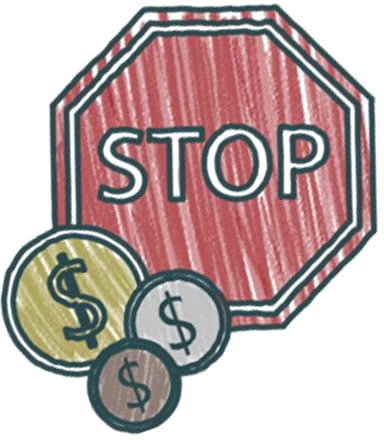
The automatic stay starts the second a bankruptcy is filed and stops collection calls, lawsuits, wage garnishments, bank restraints, car repossessions and foreclosures. A creditor who knowingly violates it can be sanctioned or made to pay damages.
A Chapter 13 catch-up plan lets you repay mortgage or car arrears over five years while keeping up regular payments, and the automatic stay stops foreclosure or repossession right away. You need enough income to cover both.
Chapter 13 loss mitigation lets you work with your lender and the court on a loan modification (lower payments, a lower rate or a longer term) under the automatic stay. Timely paperwork and follow-up keep it moving.
A Chapter 13 percentage plan pays unsecured creditors a share of their claims, based on your disposable income and non-exempt equity, then discharges the rest. Creditors must get at least what they would under Chapter 7.
A Chapter 13 cram down can reduce a second mortgage, car loan or investment property loan to the property’s current market value, with the rest treated as unsecured debt. Success depends on a credible appraisal.
The Chapter 7 means test compares your last six months of gross income to the New York median for your household size. If you’re over, careful accounting of allowed expenses, filing timing or Chapter 13 may still work.
A Suffolk County Chapter 13 plan collects your disposable income into a single monthly payment to the trustee, and the automatic stay stops creditor activity, including an imminent foreclosure sale, the moment you file.

A Chapter 13 plan collects your disposable income, what is left after reasonable living costs, into a single monthly payment sent to the trustee, who then distributes it to your creditors in the order the law requires. The plan runs three years if your household income is below the New York median for your size and five years if it is above, and the length is not a penalty: a longer plan usually means a smaller monthly payment. Your mortgage arrears, past-due taxes, and any car you are keeping get priority, while ordinary unsecured debt like credit cards is often paid only in part, with the balance discharged at the end.

The filing of a Chapter 13 case instantly causes an “automatic stay” to go into effect, which stops all creditor activity, including imminent foreclosure sales or repossessions. Getting the math right up front, so the plan is both approvable by the Central Islip trustee and livable for you, is most of the work, and it is where a self-drafted or template plan tends to fail. The debtor is required to remain current with post-petition payments for secured debt such as mortgages and car loans, since a secured creditor that is not paid can move for relief from the automatic stay.
The moment your Chapter 13 case is filed, the automatic stay takes hold and creditors must stop. Here is what that means for you.

A feature unique to Chapter 13: the case can protect a non-filing co-signer, such as a spouse or family member, from collection on joint consumer debts while your Suffolk plan is pending.

The co-debtor stay is a procedural delay acting against the creditor, who retains all their substantive rights to collect any unpaid balances from a co-debtor. It applies only during the pendency of the Chapter 13 case, and ends when the case is closed, dismissed, or converted to Chapter 7 or 11. The commencement of a Chapter 13 case extends protection to anyone who co-signed a consumer debt with you, shielding a family member from collection while your plan runs.

Because of this, it is not always necessary for spouses to commence joint or separate bankruptcy proceedings to discharge joint debts, if those debts will ultimately be paid in full under a debtor’s Chapter 13 plan. A creditor who attempts to collect a consumer debt from a co-debtor will be in violation of the co-debtor stay and in contempt of court. The stay prevents a lawsuit against the co-debtor, garnishment of the co-debtor’s wages, and foreclosure or repossession of property owned by the co-debtor that secures the debt.
A creditor may get around the stay only by showing the co-debtor received the benefit of the claim, the plan does not propose to pay the debt in full, and continuation of the stay would cause irreparable harm.
Chapter 13 has no income ceiling the way Chapter 7 does, but the means test still sets whether your plan runs three years or five, and there are debt limits that decide who reorganizes under Chapter 13 rather than Chapter 11.

Chapter 13 has no income ceiling the way Chapter 7 does, but the means-test calculation still matters: it sets whether your commitment period is three years or five and how much disposable income the plan must pay. There are debt limits, separate caps on secured and unsecured debt that Congress adjusts periodically, and a filer whose debts run above them reorganizes under Chapter 11 instead.

New York exemptions still do their work inside a Chapter 13, protecting home equity up to the downstate homestead figure, roughly $204,825 for Suffolk, along with a vehicle, tools of your trade, and retirement accounts. For Suffolk’s self-employed tradespeople, 1099 earners, and hospitality workers whose income swings with the season, proving a plan is feasible on real, uneven cash flow is the crux, and we build the budget to survive both the trustee’s review and a slow month.
Trusted Chapter 13 representation across Suffolk County, from Melville to the East End.
Schedule a Free Consultation
Our focus is simple: keep good people in the homes and lives they’ve worked hard to build.
In Suffolk County a mortgage foreclosure runs through the Suffolk County Supreme Court, whose foreclosure part sits at the Cohalan Court Complex in Central Islip. A Chapter 13 case cures the arrears in one of two ways: a “traditional” catch-up plan, or a court-supervised loss-mitigation plan that pursues a mortgage modification.

Once a Suffolk judgment and a sale date are set, a lump-sum reinstatement is often the only thing the lender will accept, money most families do not have. Chapter 13 changes that. The automatic stay halts the scheduled auction the instant the petition is filed, and the plan then lets you cure the entire arrears over its full term while you resume the regular payment going forward, so the lender is made whole on the court’s timeline instead of all at once. The chapter can also strip a wholly unsecured junior lien: a second mortgage or a home equity line with no equity left underneath it can be treated as unsecured and largely discharged. And the co-debtor stay extends the protection to anyone who co-signed a consumer debt with you.

In a “traditional” or “catch-up” plan, the client resumes post-petition mortgage payments and, in addition, makes monthly Chapter 13 plan payments on pre-petition arrears and debt to the court-appointed trustee. The combination keeps the client from falling further behind while catching up on the arrears that existed before filing. Secured debt such as mortgage arrears, and priority debt such as taxes, must be paid in full over the plan, while unsecured credit card debt can be paid at a percentage on the dollar.

Because many foreclosures involve mortgage arrears of many years that are too high to cure over a 60-month plan, seeking a mortgage loan modification through a loss mitigation program has become a standard approach. Loss mitigation is the pursuit of a modification by the debtor, overseen and encouraged by the Bankruptcy Court, during which the debtor pays the hypothetical modified payment under the plan to the trustee to demonstrate an ability to sustain it. The traditional plan is generally safer, since its success depends on payments rather than on approval, while loss mitigation is less expensive month to month but depends on the lender approving the modification.
Suffolk Chapter 13 cases are filed at the U.S. Bankruptcy Court for the Eastern District of New York, Central Islip division, and because Central Islip is physically in Suffolk, that courthouse is genuinely your home court, with no trip to Brooklyn.
The automatic stay begins and stops any foreclosure sale; within two weeks the schedules and Chapter 13 plan are filed.
Your meeting of creditors is held before the standing Chapter 13 trustee; plan payments begin within a month.
The judge confirms the plan at Central Islip; once all payments are made, your remaining debt is discharged.

The case is initiated by filing a bankruptcy petition and related documents at the Central Islip division, at 290 Federal Plaza. Your 341 meeting of creditors is held there about a month after filing, and the standing Chapter 13 trustee who reviews your plan and receives your monthly payments works out of that division. Confirmation, the hearing where the judge approves the plan, happens there too. We appear in that courtroom regularly, from local offices in Melville and Bohemia, and that day-to-day familiarity with how the Central Islip trustees read a plan is exactly what a national directory listing or an out-of-area firm cannot offer a Suffolk filer.
Early in a case, the Chapter 13 Trustee can move to dismiss for plan-payment arrears, lack of plan feasibility, missing financial documents, delays with the schedules or plan, non-attendance at the creditors’ meeting, or a failing loss-mitigation effort. Separately, a secured creditor can move for relief from the automatic stay if the debtor falls behind on post-petition mortgage, vehicle, or other secured payments, which is why staying current matters.
The CARES Act (signed March 27, 2020) and the COVID-19 Bankruptcy Relief Extension Act of 2021 allowed a confirmed Chapter 13 plan to be extended by up to 2 years, from 60 months to as much as 84 months, based on COVID-19-related hardship, effectively lowering monthly payments for debtors whose plans were confirmed before March 26, 2021.
Your home protected, your debts reorganized, and your footing restored.
Schedule a Free Consultation
No more collection calls or sleepless nights, just a clear path forward, with an experienced attorney at your side.
Free ConsultationChapter 7 erases qualifying unsecured debt in months and is the right call when you are current on the house. It does nothing for arrears, and that is the gap the repayment plan fills for a Suffolk homeowner behind on the mortgage.

Chapter 7 erases qualifying unsecured debt in a matter of months and is the right call when you are current on the house or do not own one and simply need a clean break. It cannot force a lender to accept catch-up payments, which is the gap Chapter 13 bankruptcy fills. If you are behind on a Suffolk mortgage and want to keep the home, if you earn too much to pass the Chapter 7 means test, or if you have non-exempt property a liquidation would put at risk, the repayment plan is the tool that protects it.

If you are weighing the two chapters more broadly, the bankruptcy lawyer in Suffolk County overview walks through both, and we tell you the honest answer at the free consultation rather than steering you to the larger fee. Where a client can qualify for both and needs both, a Chapter 7 can be filed first to discharge unsecured debt, followed by a Chapter 13 to deal with mortgage arrears, a sequence nicknamed a “Chapter 20” that requires careful pivoting of the budget.
Beyond curing arrears, Chapter 13 offers reorganization tools that a Chapter 7 case simply cannot. Three of the most useful for Suffolk homeowners are below.
A wholly unsecured second mortgage or home-equity line on your Suffolk home can be treated as unsecured debt and paid at a vastly reduced amount.
Where a creditor’s proof of claim overstates what is owed, an objection can reduce or completely expunge the claim.
Though not dischargeable, student loans can be paid at a reduced percentage over the plan and stretched across successive cases.
Secondary loan “cram downs” are a possibility in Chapter 13 for the debtor’s principal residence. If you have a secondary mortgage or home-equity loan on your Suffolk home which is totally unsecured, in a Chapter 13 case it can be deemed unsecured debt (rather than secured) and paid at a vastly reduced amount. To accomplish this we file a motion showing the Court the complete lack of equity in the property to support the secondary mortgage. Assuming the motion is granted, and if a percentage plan is justified, the entire second mortgage can be paid at a percentage on the dollar and discharged at the end of the plan, provided the client stays in Chapter 13 for the full duration for the relief to have permanent effect.
Amounts listed in a Chapter 13 plan are based on the proofs of claim filed by creditors. Where a creditor files a proof of claim that significantly exceeds the amount scheduled by the debtor, and the debtor has proof the amount is incorrect, an objection to the claim can be filed, which, if successful, reduces or completely expunges the claim. The debtor can object not only to the amount of the claim, but also to its asserted treatment (administrative, priority, or secured rather than unsecured) and even to the existence of the claim if there is no documentary support for it.
In cases where the median-income test, the budget, and the amount of unprotected equity allow a “percentage plan,” a Chapter 13 can let a client pay only a relatively small percentage of their unsecured debt. Student loans are unsecured but not dischargeable, so they are unique in that they can at least receive relief as a reduced percentage payment over the plan. Although the remaining balance is still owed, the client can refile another Chapter 13 case afterward, potentially stretching out and slowly paying down an overwhelmingly large loan. This approach is most useful for private student loans, which are often far less flexible than federally backed loans.
Room to breathe again: your home kept, your debts back under control.
Talk to an Attorney
When the pressure lifts, everything feels lighter. We help Suffolk County families get there, and stay there.
It is not uncommon for someone determined to save their home to file Chapter 13 again after an earlier case did not succeed. What is possible depends on how and when the prior case ended.
A previous case terminated over a year ago does not statutorily inhibit a new filing. However, if the debtor has over-used the bankruptcy system, a creditor or trustee, aware of prior filings reported for the last eight years, may cast the debtor as filing merely for delay and seek in rem relief from the stay and/or dismissal with prejudice, usually for 180 days to two years.
A discharged Chapter 7 case (unlike a dismissed case) does not statutorily inhibit a later Chapter 13 filing. In fact, filing Chapter 7 first to discharge unsecured debt and later Chapter 13 to address mortgage arrears is a recognized strategy. The challenge is qualifying for both, negative disposable income for Chapter 7, then positive disposable income for Chapter 13, which requires showing a significant change in income or spending.
If the debtor had only one Chapter 13 (or Chapter 7) case pending and dismissed within the last year, it is possible to file another Chapter 13, as long as the debtor can verify by motion a “change in circumstances” (an increase in income or reduction in expenses). That motion must be made and granted within 30 days of filing to extend the stay; otherwise the initial 30-day stay terminates and creditors can proceed as if there were no stay.
If two or more Chapter 13 cases were pending and dismissed in the last year, a new case may not automatically stay a foreclosure sale, because the automatic stay does not go into effect on filing. To obtain a non-automatic, judicial stay, the debtor must quickly move by Emergency Order to Show Cause and demonstrate strong financial “changes in circumstances” that improve the chances of success in another Chapter 13 case.
A debt-settlement outfit will offer to negotiate your credit cards and leave your foreclosure untouched, because it cannot file anything or stand in a courtroom. We can.

This is a full law firm of 6 attorneys and 25-plus staff that has filed and confirmed Chapter 13 plans since 1988, which means we invoke the stay, draft the plan, defend it at confirmation, and litigate a lien-strip motion when the numbers support one. You deal directly with an attorney, never a call center, on a flat fee spelled out in writing, and in Chapter 13 that fee usually folds into the court-approved plan, so many Suffolk homeowners begin with little or nothing out of pocket. When a case runs bigger than one county, a Long Island bankruptcy lawyer on the same team carries it across Suffolk and Nassau without a handoff.

The credentials behind that are verifiable: an Avvo 10.0 “Superb” rating and a 4.9 aggregate, a 5.0 on Martindale-Hubbell, a BBB A+, and a 2026 Super Lawyers selection, with a founder who clerked for a U.S. Bankruptcy Judge and published bankruptcy scholarship at NYU Law. We appear regularly at the Central Islip bankruptcy court from local offices in Melville and Bohemia.

Our consultations are free. The advice may be invaluable.
Not Sure How to Deal With Your Debt?
Free Consultation Available Now
In a free consultation, we go through your situation and your options with you, and decide on a plan of action.

Creative Legal Solutions to Your Debt Challenges. See how we deliberate with you and strategize which options best apply to your situation, and how to best resolve your debt challenges.
How our attorneys can help at every stage of your case.
Available 24/7 at 888-4-U-NEW-START, or call the Melville office at 631-212-1046. We have represented Suffolk County homeowners since 1988. Your consultation is free, confidential, and carries no obligation.