(631)-271-3737,
QUEENS
(718)-751-0226
(516)-307-0262,
BROOKLYN
(347)-508-9316,
BOHEMIA
(631)-223-4502
(631)-271-3737,
QUEENS
(718)-751-0226
(516)-307-0262,
BROOKLYN
(347)-508-9316,
BOHEMIA
(631)-223-4502
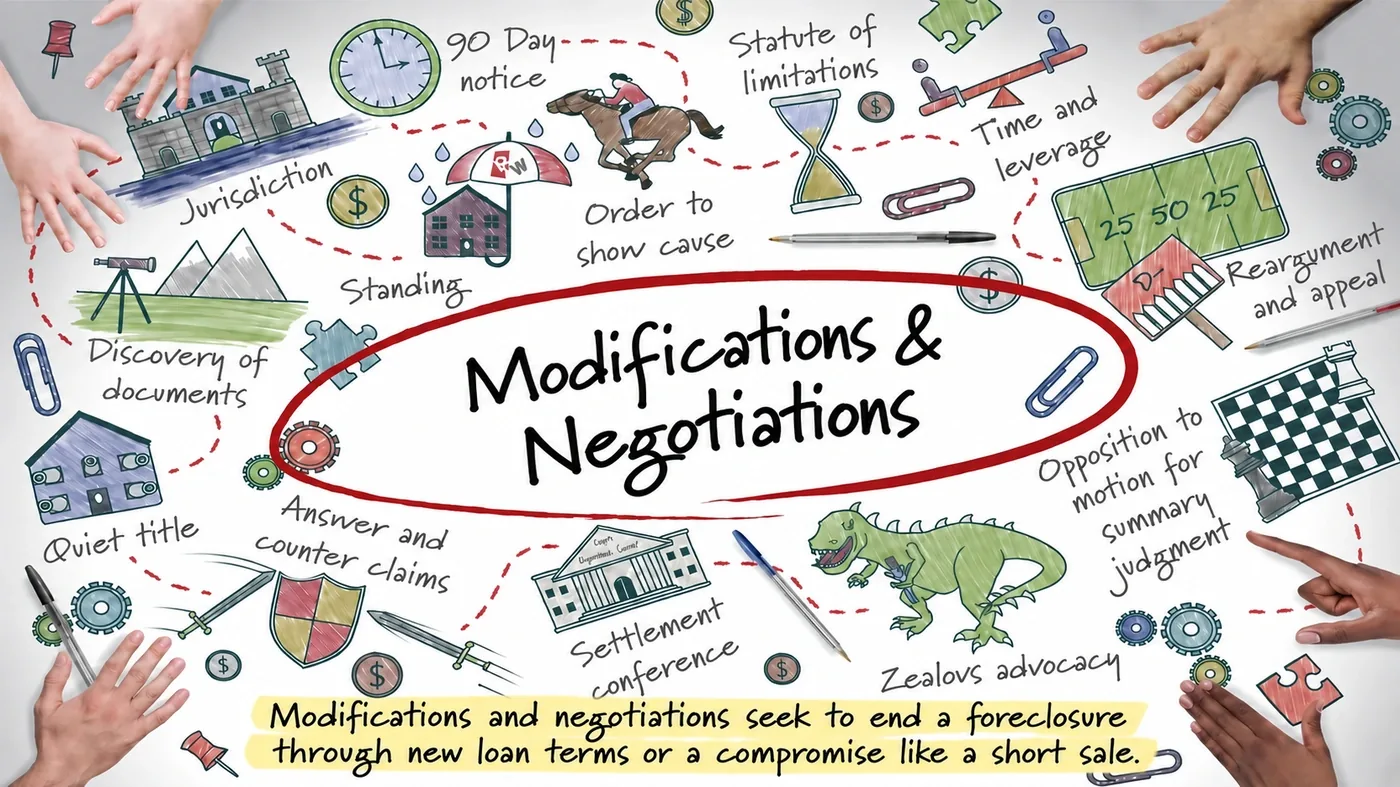
Mortgage modifications, negotiations and settlements of a mortgage, allow homeowners to make problematic mortgages more affordable by reducing, extending, and deferring payments.


Negotiations with the lender can be pursued prior to the time a foreclosure proceeding starts and/or after it has already started. It is important for homeowners in foreclosure, or threatened by foreclosure, to maximize their possibilities for a negotiated settlement, including a loan modification by making such negotiations part of their overall strategy in terms of resolving the foreclosure. While mortgage modifications are by far the most sought after type of settlement, there are several other possible arrangements that can work for clients in various situations. The section below is a brief overview of various types of negotiated settlements, including modifications. For more detail about Modification and Negotiation Solutions, in general, and Mortgage Modifications, specifically.

While mortgage modifications are by far the most sought after type of settlement, there are several other possible arrangements that can work for clients in various situations.

Many homeowners experiencing financial hardship with their mortgage payments are realizing that it is important to obtain representation from experienced attorneys in seeking a mortgage modification and to handle what has become a complex and often difficult negotiation process. Such negotiations can be uncertain because many mortgage holders and their attorneys are not sufficiently responsive or fair in assessing modification applications and because a mortgage holder’s acceptance or denial of a modification application is voluntary. Although the negotiations are usually time consuming and often have many challenges, the goals of better mortgage terms, in terms of the duration of the loan, its interest rate and potential deferment of some arrears, are very worthwhile.
The section below is a brief overview of various types of negotiated settlements, including modifications.

The goal of a mortgage loan modification is to avoid foreclosure by restructuring the mortgage to combine it with the arrears and allow for an affordable, resumed monthly payment.

Mortgage loan modifications have become one of the most common ways to resolve a mortgage in arrears, and lenders now routinely offer them as an alternative to completing a foreclosure. The goal of a mortgage loan modification is to avoid foreclosure by restructuring the mortgage to combine it with the arrears and allow for an affordable, resumed monthly payment. The method of accomplishing this goal was to combine the principal of a loan with the arrears on the loan in order to absorb the missed payment arrears and join them with the principal resulting in a larger loan balance with better terms: a lower interest rate, a longer loan duration and with possibly some arrears deferred till the end of the loan. Under legislation passed during February of 2009, the Federal government had enacted a voluntary program to help homeowners facing “hardship” in paying their mortgage: The Home Affordable Modification Program (“HAMP”), was enacted to encourage mortgage lenders to modify mortgages for the “at risk” homeowner. The HAMP program expired on December 31, 2016, but it inspired lenders to have similar “in-house” modification programs which were more within their control and less subject to government regulation. Under HAMP and the “in-house” Modification programs the arrears on a mortgage would be combined with the remaining principal balance, with the interest reduced and the loan term extended, effectively creating a larger loan where the monthly payments are less. While the HAMP program had expired at the end of 2016, it has been largely replaced by the system of non-HAMP private bank modifications that almost every major lending institution offers. Whereas before borrowers needed to first be screened for a potential HAMP modification and only if they did not qualify for HAMP would the in-house modification be considered, now the “in-house” options offered by the particular lender are the only modification options available.

The requirements to qualify for most “in-house’ modifications is similar to the qualification for HAMP and are as follows:
The methods by which lenders may help homeowners under “in-house” modifications are as follows:
Most institutional lenders, offer several “in-house”programs, which are often modeled after the former HAMP program, but are less regulated than HAMP. Because navigating through these programs and dealing with the lenders’ bureaucracy can be difficult, successful modifications usually involve the client retaining a qualified professional, working on their behalf, and a concerted and a persistent campaign to urge the lender to modify a particular mortgage loan.
In the sections in this site focusing specifically with Modifications and Negotiations, these options are explored in more detail.

Trusted modification and settlement counsel across Nassau and Suffolk Counties.
Schedule a Free Consultation
Forbearance Agreements are temporary agreements where the Mortgage Lender will not foreclose as long as the Borrower, who is in arrears, agrees to and abides by a payment plan to cure the arrears over a given period of time. Usually Forbearance Agreements require an downpayment and that the balance of the arrears be paid within a short time (usually within a year or less).

Short Sales require the Borrower in arrears to find a potential Buyer for the distressed property who willing to offer an amount to the Lender that is less than what is owed on the mortgage loan, but sufficient to the Lender given litigation issues, cost and delay, so that the Lender is willing to allow the Borrower sell the Property, and willing to close without the full payoff amount due on the loan. The Borrower is released from a possible deficiency judgment in return for the Borrower’s expediting the sale and transfer of the property.

A negotiated settlement can lift the weight of a mortgage you can no longer carry, with an experienced attorney handling the lender for you.
Free Consultation
A Deed In-Lieu Agreement is an agreement by the Homeowner(s)/Borrower(s) to surrender the deed to the Lender to avoid a foreclosure proceeding from commencing or from continuing. Such an agreement is usually an option where the Borrower does not need to stay at the premises and mainly wishes to end its potential liability for a deficiency and its responsibility to insure and care for the premises.

Our focus is simple: keep good people in the homes and lives they have worked hard to build.
Although negotiating a modification is often difficult and time consuming, our clients have found that our law office maximizes their negotiating advantages and greatly increases their chances of obtaining a modification.

Although negotiating a modification is often difficult and time consuming, our clients have found that our law office maximizes our clients’ negotiating advantages and greatly increases their chances of obtaining a modification. Our clients maximize their negotiating advantages by being represented by the Law Office of Ronald D. Weiss, P.C. based on the following:
The Law Office of Ronald D. Weiss, P.C. regularly represents its Long Island and New York clients in modifications and other negotiations with mortgage holders, and can review with you issues relevant to your foreclosure matter and how a modification or a negotiated settlement with your mortgage holder could help you.

Our consultations are free, the advice may be invaluable.
How our attorneys help you save your home and resolve mortgage debt.
Our attorneys have represented Long Island and New York City clients since 1988. Schedule your free, confidential consultation today.