Legally Resolving Foreclosure Through Bankruptcy, Negotiation, Litigation, Modification, Deal Making & More — Since 1988. Helping New York homeowners statewide save their homes and resolve distressed mortgages.
No obligation, no fee, no catch. Call or visit any of our three Long Island offices today.
Book Free ConsultationBrooklyn Queens Melville Bohemia Mineola
View All LocationsHablamos Español हम हिंदी बोलते हैं ہم اردو بولتے ہیں Мы говорим по-русски
Schedule a Call
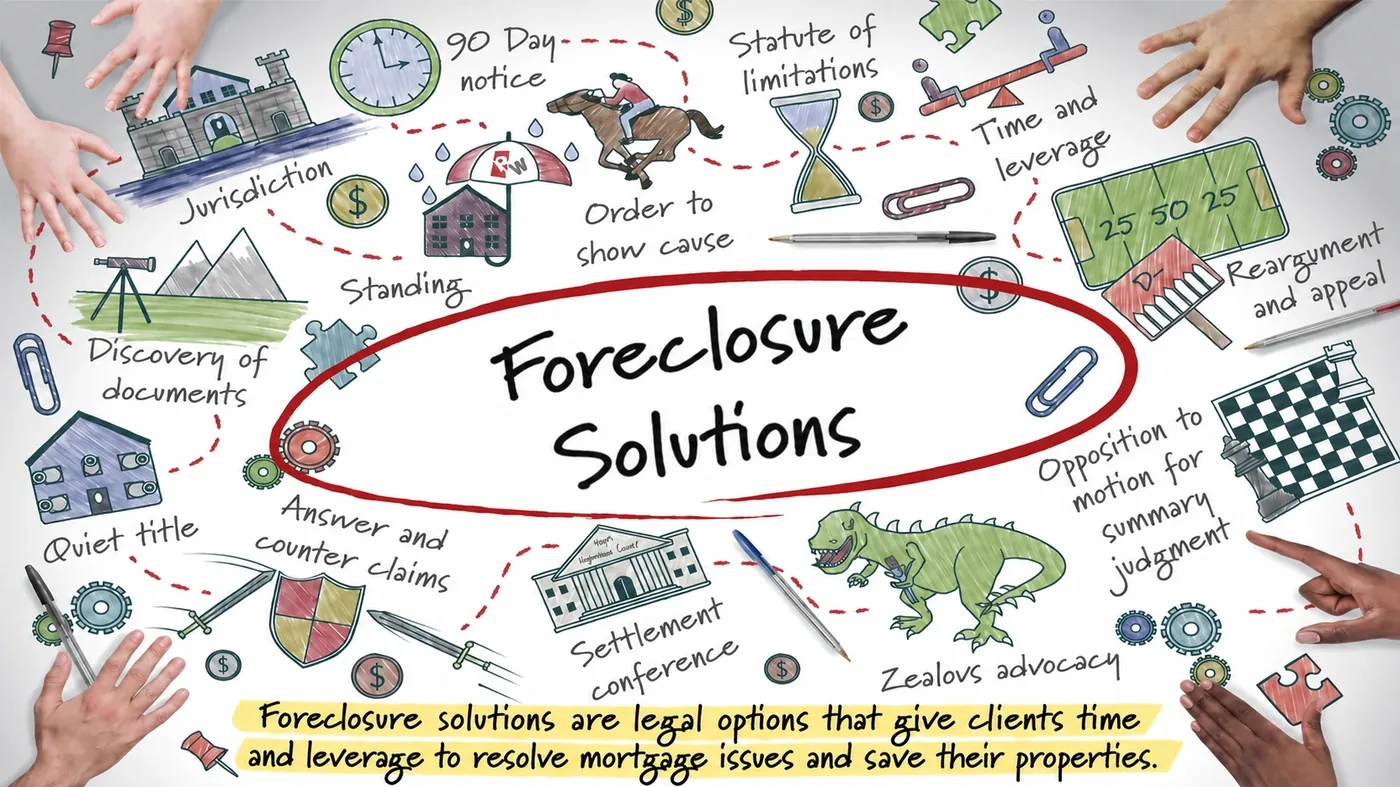
Foreclosure defense gives our clients time and leverage to better resolve their mortgage issues.
I. Foreclosure Solutions
The staff of the Law Offices of Ronald D. Weiss, P.C. has been helping individuals and businesses with foreclosure solutions since 1988. We offer not just one approach, but usually several customized foreclosure solution options for each situation.
Our staff are very experienced and are assigned to departments in the following areas: negotiation, bankruptcy, litigation, and modification. The result for you, as a potential New York client, is an informative analysis of your foreclosure challenges, in a free legal consultation. If you retain us, you’ll find our legal services to be excellent and affordable.
Foreclosure pressures are accelerating across New York State, from New York City and Long Island to the Hudson Valley and Western New York. Whether your case is in the State Supreme Court of the county where your property sits, in one of New York’s federal bankruptcy courts, or still pre-litigation with the lender, our office knows how to intervene.
We are highly experienced in, and able to review with you, all foreclosure solutions: foreclosure defense, mortgage modification, bankruptcy solutions, negotiation, deal making, and litigation. Many New York homeowners come to us thinking they have only one option — usually loss of the home — and leave the consultation with two or three viable paths to save it.
Our four department-driven approach means a New York foreclosure case is reviewed by a negotiation team (for modifications, reinstatements, and payoffs), a bankruptcy team (for Chapter 13 and Chapter 11 strategies), a litigation team (for defense, motions, and appeals), and a modification team (for in-court and out-of-court loan modifications). The right answer is almost always a customized blend of two or more.
We Are Highly Experienced In, and Able to Review With You, All Foreclosure Solutions.
II. Why Choose a New York Foreclosure Lawyer
When New York homeowners hire a foreclosure attorney, they should know exactly what they’re getting. Here is what makes the Law Offices of Ronald D. Weiss, P.C. different from every other foreclosure firm across New York State:
Exceptional Legal Services Dealing with Foreclosure Solutions, Throughout New York, Long Island, and New York City — Since 1988.
Relief Starts Here
New York homeowners tell us they sleep better the moment the foreclosure sale is stopped. That immediate relief is just the beginning — we help you find the path that keeps your home, your equity, and your peace of mind intact.
III. Free New York Foreclosure Consultation
During a free legal consultation with a prospective New York client, our attorneys will assess your specific facts, financial situation, and foreclosure challenges. We will analyze the applicability of “legal foreclosure solutions,” including foreclosure defense, mortgage modification, bankruptcy solutions, negotiation options, deal making, and litigation options. The legal options we may discuss include:
Answering or moving to dismiss the foreclosure complaint; opposing motions for summary judgment and judgment of foreclosure and sale; cross-moving for relief for the Defendant; opposing the referee’s computation; emergency orders to show cause and requests for a stay; and appeals to the Appellate Division, Second Department. New York’s judicial foreclosure system gives New York homeowners powerful defenses — standing challenges, statute of limitations, RPAPL 1304 notice defects, and lender bad-faith findings — that we know how to assert and win.
Modifications negotiated during New York Supreme Court mandatory settlement conferences at the start of a foreclosure; during Loss Mitigation efforts in participating Bankruptcy Courts (E.D.N.Y. has an active Loss Mitigation program); and in direct applications to mortgage lenders not directly related to ongoing court proceedings. A successful modification rolls arrears into a new principal balance with a fresh term and adjusted rate — turning years of catch-up payments into one manageable monthly payment.
Chapters 7, 11, 13, and Subchapter V, which have debt and income limits and apply in different situations. Chapter 13 is the workhorse for New York homeowners — it stops the foreclosure sale via the federal automatic stay and lets the homeowner cure mortgage arrears over a 3-to-5-year plan. Also includes adversary proceedings, contested motions, and bankruptcy appeals when lenders contest the case or seek to lift the stay.
Negotiating reinstatement and/or payoffs; deed-in-lieu agreements; consents to judgment; cash-for-keys arrangements; also includes voluntary sales, short sales, and refinancing. Many New York homeowners have more equity than they realize — a strategic sale or refinance, negotiated under the leverage of foreclosure defense, often produces a far better outcome than a sheriff’s sale.
Landlord-Tenant actions, surplus actions (recovering proceeds from a foreclosure sale that exceeded the debt), partition actions, and quiet title actions. We also defend post-foreclosure deficiency claims and prosecute affirmative claims against lenders, servicers, and bad-actor third parties. Foreclosure rarely starts and stops with one lawsuit — we handle every collateral matter that arises.
Our Consultations Are Free, But Our Legal Advice Is Often Invaluable.
IV. The Problem
Foreclosure rates across New York State, from New York City and Long Island to the Hudson Valley and Upstate, are again showing signs of accelerating. The post-Pandemic inflationary economic environment has created multiple foreclosure pressures simultaneously:
New York median sale prices have climbed past pre-pandemic peaks, pulling property taxes and homeowner expenses up with them. Buyers who stretched to qualify a few years ago are now caught between rising costs and stagnant wages.
New York State and local tax burdens have risen steadily. For homeowners on fixed income or limited-growth wages, a $1,000-$3,000 annual tax bump can be the trigger that pushes a mortgage into delinquency.
For homeowners with adjustable-rate mortgages, HELOCs, or balloon resets, the interest-rate environment of the past several years has dramatically increased monthly payments. Refinancing out of trouble is no longer an option for many.
Older housing stock across New York, in cities and towns statewide, often needs significant capital repair. Roofs, boilers, plumbing, and electrical upgrades can run $20K-$60K and force homeowners to choose between repairs and the mortgage.
Wages have not kept pace with the cost of owning a New York home. The widening chasm between income growth and the actual cost of property ownership is the underlying driver of nearly every distressed mortgage we see.
What is new in this foreclosure surge is that real property ownership and home maintenance is becoming more challenging for many middle-class New York families. The widening gap between the expectations of home ownership and its growing expense is causing more homeowners to fight harder to hold onto their property — in court, in bankruptcy, and in lender negotiations.
Our Office is Helping New York Property Owners with Distressed Mortgages Keep Their Homes — By Utilizing the Legal Solutions Discussed Herein.
Customized Foreclosure Strategy
Choosing the right foreclosure solution is only the start. From there, we execute — defending the case in the State Supreme Court of the county where the property sits, negotiating with the lender, filing the bankruptcy, or structuring the deal. Our attorneys don’t just file paperwork; we position you to keep your home or exit cleanly.
V. Our Approach
The approach taken by our law office is to find a “customized strategy” for each New York client’s unique challenges. The options we offer, after a free consultation, are geared to each situation. Sometimes the right answer is straightforward and affordable; in more complex New York foreclosure cases, the solution can be nuanced, creative, and multi-disciplined. The right solution depends on six factors:
The goals and financial abilities of the borrowers and/or New York property owners. Some homeowners want to keep the house at all costs; others need to walk away cleanly with their credit intact. Some have stable income; others are between jobs. The right foreclosure strategy starts with what you actually want and what you can actually afford.
Goals & AffordabilityThe flexibility and posture of the lender. Some lenders (big national servicers, GSE-backed loans like Fannie/Freddie) have well-developed modification programs. Others (private lenders, hard-money lenders, securitized investor pools) are far less flexible. Knowing which New York lenders modify, which litigate hard, and which settle cheaply at the courthouse steps is part of how we choose strategy.
Flexibility & PostureThe valuation and use of the New York property. An owner-occupied home in one county behaves differently than a multi-family investment or a mixed-use building in another. The property’s current value vs. mortgage balance (equity position), its income-producing potential, and its condition all drive what solutions are viable.
Value & UseThe secured amounts owed against the property — first mortgage, second mortgage, HELOC, tax liens, mechanics’ liens, judgments. The full lien picture often makes or breaks a modification or sale. New York homeowners are sometimes surprised to learn we can strip off wholly unsecured junior liens in Chapter 13.
All LiensThe loan terms and type of loan. Fixed vs. adjustable, fully amortizing vs. interest-only, FHA/VA/conventional/portfolio. Each loan type has its own modification rules and its own foreclosure litigation defenses. Predatory loan features — balloon payments, negative amortization, undisclosed fees — can sometimes be unwound entirely.
Type & TermsPast legal proceedings involving the property and/or the client — prior bankruptcies, prior modifications, prior foreclosures, divorce judgments, probate matters. History shapes which doors are still open. A homeowner with a prior Chapter 13 dismissal within the past year needs a different strategy than a first-time filer.
Prior CasesEach Foreclosure Challenge is Unique — and Each Foreclosure Solution Also Needs to be Unique.
VI. The Solutions
The immediate legal challenge to New York property ownership arises when mortgage arrears accumulate. If those arrears are not cured within several months, the lender may declare the loan in default. After another few months, the homeowner may be served with a foreclosure summons and complaint, which the lender had earlier filed in the State Supreme Court of the county where the property sits. However, foreclosure problems often have multi-disciplined legal solutions:
Filing a Chapter 13 case immediately triggers the federal Automatic Stay — halting any scheduled New York foreclosure sale the minute the petition is filed. Over a 3-to-5-year plan, the homeowner cures mortgage arrears and any other secured/unsecured debt while staying current on the ongoing mortgage payment.

New York is a judicial foreclosure state, which means the lender must prove its case in the State Supreme Court of the county where the property sits. That gives New York homeowners powerful defenses that don’t exist in non-judicial states:

A successful mortgage modification turns a behind-on-payments crisis into a single new, affordable monthly payment. We pursue modifications through three different channels:

Many New York foreclosure cases never need a court filing or bankruptcy — just a well-negotiated reinstatement (lump-sum cure of the arrears), forbearance (temporary payment pause with later catch-up), or payoff with discount (lender accepts less than full balance to close the file). We negotiate these with full knowledge of what the litigation/bankruptcy alternatives look like — that’s the leverage that gets a good number.

When keeping the New York home is not the right outcome, we structure the exit cleanly: deed-in-lieu (transfer the property to the lender in exchange for debt cancellation), short sale (sell the home for less than the mortgage with lender consent and deficiency release), cash for keys (lender pays the homeowner to vacate cleanly), or a strategic voluntary sale (often above expected foreclosure-sale value, capturing equity for the homeowner). The goal: walk away without a deficiency judgment and with as much equity and credit preserved as possible.

Our Abilities to Implement Multi-Disciplined Solutions Allow for a Flexible, Nuanced, and Often Successful Strategy.
VII. About the Firm
Our law office has represented New York individuals and businesses undergoing financial and foreclosure challenges since 1988. With six attorneys and a staff of approximately thirty, we are capable of handling most foreclosure matters — affordably, accessibly, and with a free initial consultation.
Our staff is structured into five strong legal departments — Foreclosure, Negotiations, Litigation, Mortgage Modifications, and Deal Making — so every New York foreclosure case gets reviewed by the attorneys with the deepest experience in that specific strategy. Across the firm, we have resolved hundreds of millions of dollars of mortgage debt for tens of thousands of Long Island and New York City residents and businesses.
Defense, modification, bankruptcy, negotiation, and deal making — all five strategies under one roof.
Chapter 13 mortgage cures, Chapter 11 reorganizations, Subchapter V small business solutions, and Chapter 7 fresh starts.
Settlement conference modifications, Bankruptcy Court Loss Mitigation, and direct lender applications.
Reinstatement, payoff, forbearance, deed-in-lieu, short sale, cash for keys — we negotiate every type of deal.
Foreclosure defense, summary judgment opposition, emergency stays, and appeals to the Appellate Division.
Our Firm Has Resolved Hundreds of Millions of Dollars of Mortgage Debt For Tens of Thousands of New York Residents and Businesses.
Protect What Matters
When you walk into our office, you’re not just hiring a bankruptcy lawyer — you’re hiring a team that fights to protect everything you’ve built and everyone who depends on you.
Five Convenient Offices. Daytime and Evening Hours.

Queens Office
Closest to you
Brooklyn Office
Closest to you
Melville Office (Main Office)
Closest to you
Bohemia Office
Closest to you
Mineola Office
Closest to youLocal Expertise
The Law Offices of Ronald D. Weiss, P.C. represents homeowners in every county and borough of New York State. As a statewide foreclosure lawyer, we defend cases from New York City to Long Island and across Upstate. We serve as a Long Island foreclosure lawyer and handle foreclosure defense throughout the region, including as a foreclosure lawyer in Nassau County, a foreclosure lawyer in Suffolk County, a foreclosure lawyer in Brooklyn, and a foreclosure lawyer in Queens. We know your local courts and how to fight for your financial future.
Don’t see your county? We serve all of New York State, give us a call.
Call 888-4-U-NEW-STARTForeclosure defense across New York State
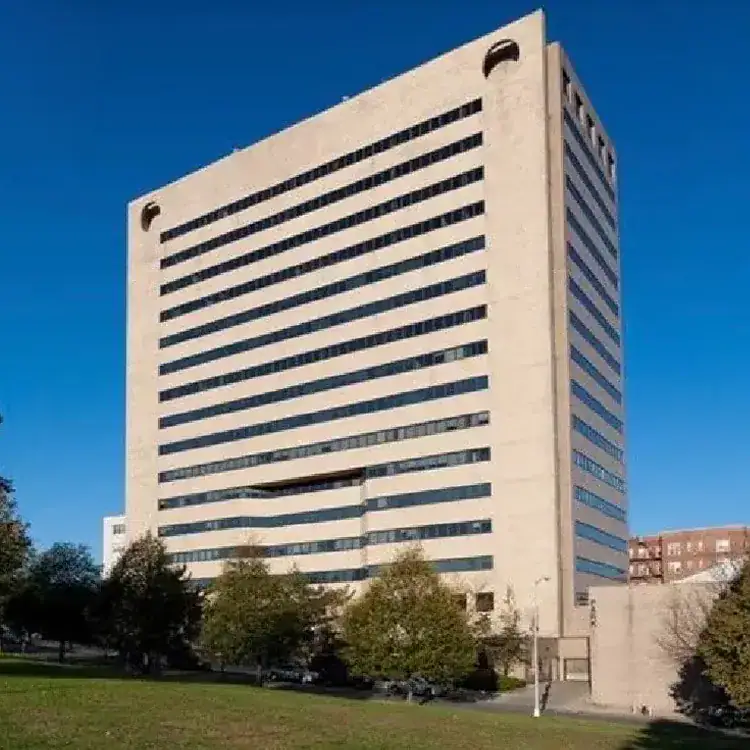
New York is a judicial foreclosure state. Your lender cannot simply schedule a sale. It has to sue you in the State Supreme Court of the county where your property sits and prove its case in front of a judge. Venue follows the property, so a home in Suffolk is litigated in Suffolk County, a home in Erie County in Buffalo, and a home in the Bronx in Bronx County.
That single fact is the source of most of your leverage: a judge has to sign off before anything happens to your home, and a contested case commonly runs for years rather than months. There is also a second, faster way to stop a sale outright. Filing a bankruptcy petition triggers the federal automatic stay the moment the case is filed, which halts a scheduled foreclosure auction even if it is set for the next morning. Once the court signs an Order of Reference, the lender generally has one year to move for a Judgment of Foreclosure and Sale, and a case left to sit can be dismissed for neglect.
Before a foreclosure case on a home loan can even be filed, your lender must send you a 90-day notice under RPAPL 1304. It has to go by certified or registered mail and by first-class mail, to your last known address and to the property, in its own separate envelope, and it must list at least five housing counseling agencies that serve your county. Sending it correctly is a condition precedent to filing, so if the lender got it wrong, the case can be challenged. The lender has its own clock too: New York gives it six years to foreclose, and the Foreclosure Abuse Prevention Act (FAPA), effective December 2022, closed the loopholes lenders once used to restart that six-year statute of limitations, so a stale foreclosure can now be dismissed for good.
Once you are served with the summons and complaint, your time to appear is generally 20 days if you were handed the papers personally, or 30 days if you were served another way, and missing that deadline is how most homeowners lose by default. But there is a second chance almost nobody knows about: under CPLR 3408(m), if you show up at your first settlement conference without having answered, you are presumed to have a reasonable excuse and get 30 days to file an answer without waiving your defenses. Showing up matters.
If the foreclosure is on a one-to-four family home you live in, New York law entitles you to a settlement conference under CPLR 3408. The court must hold it within 60 days after your lender files proof of service with the county clerk, and it mails you a notice with the date, time, and the part to appear in. Use the information listed on that notice, since it controls.
Both sides have obligations. Your lender must appear with a representative fully authorized to settle, bring the payment history and a payoff and reinstatement figure, and — if it denied you a modification — the denial letter and the actual data it used. Both sides must negotiate in good faith; if the court finds your lender did not, under CPLR 3408(j) it must at minimum stop interest, costs and fees from accruing during the delay, and it can impose a civil penalty of up to $25,000 and award you attorney's fees. Bring paystubs, two years of tax returns and property tax statements, two months of bank statements, a list of monthly expenses, and any lease or proof of rental income — and if you don't have everything, bring what you have and go anyway.
Much of New York's owner-occupied housing is small multi-family, an owner living in one unit and renting the others, and that changes a foreclosure case in concrete ways. Start with coverage: New York's 90-day notice and mandatory settlement conference apply to “home loans” on one-to-four family dwellings occupied by the borrower as a principal residence. Living in one unit of a three-family generally keeps you inside those protections; a five-unit building, or one you don't live in, generally falls outside them.
Rental income is also part of the math. Both the statute and the county conference notices specifically list rental agreements and proof of rental income among the documents to bring. Your tenants' rent is income the court and servicer will count when testing whether a modified payment is affordable — which sometimes makes a workout achievable where a straight salary calculation would not.
Most New York homeowners in foreclosure are not underwater. After decades of appreciation across much of the state, many owners have real equity in their homes, and equity changes everything.
A homeowner with real equity has options an underwater homeowner does not: refinancing, a conventional sale on your own timeline, or a Chapter 13 plan that cures the arrears. It also means that if a property sells at auction for more than the judgment, the surplus is paid into court and may be available to the former owner after other lienholders are paid, and most counties calendar these surplus-money proceedings in a dedicated part. That same equity makes homeowners targets. New York's attorney general and local district attorneys warn that deed-theft and foreclosure-rescue scams cluster around equity-rich homeowners in distress, often seniors, immigrants, and homeowners in historically Black neighborhoods.
New York law gives you specific, enforceable protections against foreclosure rescue schemes — and they exist precisely because equity-rich homeowners in distress get targeted. Under the Home Equity Theft Prevention Act, if someone is buying your home while it is in foreclosure, a deed under that contract cannot take effect until at least midnight of the fifth business day after signing, and you can cancel the contract until midnight of the fourteenth business day. The contract must carry a notice telling you the buyer cannot have you sign a deed before your cancellation right ends — and advising you to find your own attorney rather than one the buyer provides.
Separately, a “distressed property consultant” cannot take any money from you until the work is completely finished, and you can cancel that contract within five business days. If a deed was recorded against your property without your consent, report it to the New York State Attorney General and your local district attorney. You can also monitor your own record through your county clerk and free recorded-document alert services.

Frequently Asked Questions
There are several legal options to stop or delay a foreclosure: filing for bankruptcy (which triggers the automatic stay), pursuing a mortgage modification through New York Supreme Court settlement conferences or Bankruptcy Court Loss Mitigation, defending the foreclosure complaint, negotiating reinstatement or a payoff, an emergency order to show cause for a stay, and appeals to the Appellate Division, Second Department. Our New York foreclosure attorneys evaluate every option in a free consultation and recommend the customized strategy that fits your situation.
Filing a bankruptcy petition triggers the federal Automatic Stay the minute the case is filed. The stay immediately halts the foreclosure sale, even if it is scheduled for the next day. Chapter 13 lets you cure mortgage arrears over a 3-to-5-year repayment plan while keeping your home. Chapter 11 and Subchapter V offer similar protections for business owners or individuals with higher debt. We routinely file emergency bankruptcy petitions for New York homeowners with sales on the calendar.
Yes. New York law actually requires mandatory settlement conferences in Supreme Court foreclosure cases where lenders and borrowers must negotiate in good faith. We also pursue modifications through Bankruptcy Court Loss Mitigation programs and through direct applications to lenders outside of court. A successful modification typically rolls your arrears into the new loan balance with adjusted rate and term — one new mortgage payment instead of catching up on the old one.
Foreclosure defense in New York involves answering or moving to dismiss the foreclosure complaint, challenging the lender’s standing, opposing motions for summary judgment and judgment of foreclosure and sale, opposing the referee’s computation, cross-moving for relief, filing emergency orders to show cause for a stay, and appealing adverse rulings to the appellate division. New York is a judicial foreclosure state with strong homeowner protections, and a properly defended case can take years to resolve.
A deed-in-lieu is a negotiated agreement where the homeowner voluntarily transfers the property to the lender in exchange for cancellation of the mortgage debt. It avoids the public foreclosure record, can include cash-for-keys relocation assistance, and usually releases the borrower from any deficiency judgment. Deed-in-lieu makes sense when modification is not feasible, the homeowner is ready to move on, and there is no junior lien complicating title.
In New York, the lender can seek a deficiency judgment if the foreclosure sale price is less than the amount owed. Bankruptcy discharges any deficiency judgment along with the mortgage debt. Negotiated solutions like deed-in-lieu, short sale, or settlement can also be structured to waive the deficiency. We never let a New York homeowner walk away from a foreclosure without addressing the deficiency exposure.
We offer a free initial consultation with no obligation. Our legal fees vary based on the strategy chosen — modification, defense, bankruptcy, litigation, or deal-making each have different fee structures, and we offer affordable flat fees and payment plans for most matters. The cost of doing nothing — losing your home, a deficiency judgment, damaged credit — is almost always far greater than the cost of representation.
New York foreclosure is a slow, judicial process. After your first missed payment, the lender typically waits 90 days before declaring default, then files a Supreme Court foreclosure summons and complaint. From filing to actual sale typically takes 2 to 5 years in New York, with several mandatory steps in between (settlement conferences, motion practice, referee’s report, judgment of foreclosure and sale). The earlier you engage counsel, the more options you have — but even with a sale date set, we can still file bankruptcy or an emergency order to show cause to stop it.
New York Legal Services
Whether you need foreclosure defense, mortgage modification, bankruptcy, negotiation, or deal-making, our New York foreclosure attorneys are ready to take your case at any office across Long Island and NYC.
Foreclosure Solutions
Every New York foreclosure case is unique. Browse the specific legal solution that fits your situation — in most cases, we combine two or more for maximum leverage:
Schedule a Free Consultation With a New York Foreclosure Attorney
If you are facing foreclosure, dealing with mortgage arrears, behind on payments, served with a foreclosure summons, or staring down a sale date, you should speak to a foreclosure attorney as soon as possible. Our attorneys will thoroughly evaluate your situation and determine the right strategy — defense, modification, bankruptcy, negotiation, or deal-making — to protect your New York home and financial future.
Schedule Your Free ConsultationYour information is protected by attorney-client privilege from the very first conversation.