(631)-271-3737,
QUEENS
(718)-751-0226
(516)-307-0262,
BROOKLYN
(347)-508-9316,
BOHEMIA
(631)-223-4502
(631)-271-3737,
QUEENS
(718)-751-0226
(516)-307-0262,
BROOKLYN
(347)-508-9316,
BOHEMIA
(631)-223-4502
Save your New York City home with Chapter 13
Chapter 13 can stop a foreclosure and spread what you're behind on across as many as five years, so you can stay in your home while you catch up.
888-4-U-NEW-START (888-486-3978)Click to callFree consultation by phone, or in person in Brooklyn or Forest Hills.


Chapter 13 for every New York City borough
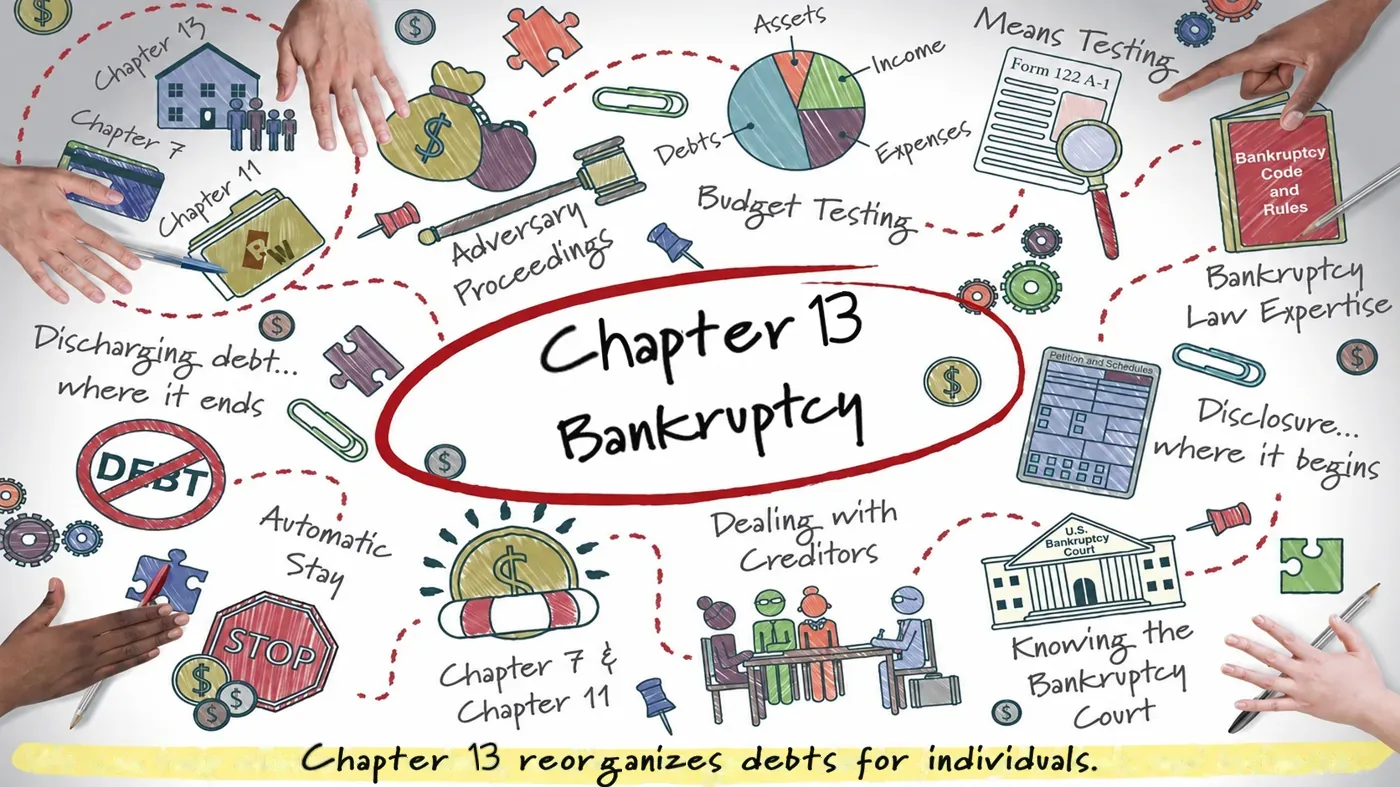
Chapter 13 reorganizes debts for individuals.
One Bowling Green or Cadman Plaza East

New York City is split between two federal bankruptcy courts, and the borough you live in decides which one hears your Chapter 13:
Note Staten Island: its cases go across the harbor to Brooklyn, not to Manhattan.
Both city courts apply the same federal law. Chapter 13 bankruptcy lets an individual with regular income repay debts over three to five years, under a court-approved plan designed around staying in the home.
Your borough's court still matters: it decides who collects your payments, which plan form you file, and how a loan modification can run inside your case.
Before any plan, know which courthouse it goes to.
Same chapter, different rules in each court
The two districts run Chapter 13 side by side, each with its own trustee, forms and programs. Here is how they differ for a city filer:
One rule across the Southern District sets the early calendar: your plan has to be served at least 31 days before the confirmation hearing (Local Rule 3015-1(c)). A plan drafted on the Eastern District's form starts a Manhattan or Bronx case behind.
The Southern District is also where Ron's career began. He was law clerk to U.S. Bankruptcy Judge Prudence B. Abram there from 1988 to 1989, and he has been admitted in both districts since 1992.
Manhattan and Bronx cases land in the court where Ron clerked.

A court program that names co-ops

The Southern District's Loss Mitigation Program brings you and your lender to the table, under the court's own procedures, whenever the home you live in is at risk of foreclosure.
Those procedures, which run across the Southern District, don't stop at houses: they name a cooperative apartment used as your principal residence, and a loan secured by co-op shares.
While a Southern District loss mitigation request is pending, a lender can't file a motion to lift the stay except to prevent irreparable injury, and motions already filed are adjourned. That gives a modification room to happen.
Neither city court promises a new loan, so we check how the program applies to your co-op or condo at the consultation.
New York's homestead protection also reaches co-op shares and condo units: up to $204,825 of equity in New York and Bronx counties, the same top amount across the city (effective April 1, 2024).
If keeping the apartment isn't affordable but the shares hold equity, a Chapter 13 sale plan can buy time to find a buyer inside the case, instead of leaving the price to a borough auction.
The Southern District wrote co-ops into its loss mitigation rules.
Three boroughs, three sale days
A city foreclosure ends in an auction run by the borough's own Supreme Court, each on its own calendar (as of 2026):
File a Chapter 13 petition before your Monday, Tuesday or Thursday auction and the automatic stay takes hold; the sale generally cannot go ahead. An earlier bankruptcy of yours can narrow that protection, which is why we ask.
Read how the stay protects you the day you file. If your borough's sale date is close, an emergency petition can be on file in 24 to 48 hours; when necessary, that same day.
A filing puts the foreclosure on hold without closing it. The bankruptcy runs in federal court while the foreclosure waits in New York, Bronx or Richmond County Supreme Court, and our firm does both kinds of work, including foreclosure defense through trial and appeal.

Every debt challenge is unique, and every debt solution we design is customized for that specific client's situation.
Book My Free ConsultationStart by phone, from wherever you are
Our city offices are in Brooklyn and Queens. We have no office in Manhattan, the Bronx or Staten Island, and most of a Chapter 13 doesn't need one:
No office in your borough doesn't mean a trip across the city.

Know the cost before you commit
Chapter 13 attorney fees are typically built into the court-approved repayment plan. Our fee then travels with the monthly payment you already send your district's trustee.
The consultation is free, and every cost is disclosed in a written agreement before you sign anything.
Filing fees go to the court, not to us.
A former clerk in your corner

Fresh out of NYU Law in 1988, Ron spent a year inside the Southern District's bankruptcy court as a judge's law clerk. That court now hears every Manhattan and Bronx bankruptcy.

Admitted since 1992 to the U.S. District Courts for the Eastern and Southern Districts of New York, the two federal districts that cover all five boroughs.

His NYU Law honors include the John J. Galgay Fellowship in Bankruptcy and Reorganization Law; he also wrote "The Contempt Power of the Bankruptcy Court" (6 Bankruptcy Developments Journal 205).

Your first conversation is with Ron himself. After that, the firm's attorneys, paralegals and foreclosure team see it through to discharge.

Spanish, Hindi, Urdu and Russian are spoken on our team, alongside English.
Avvo 10.0 Superb · BBB A+ · Super Lawyers 2026 · Martindale-Hubbell Client Champion Platinum 2026
Admitted in both courts, trained in one of them.
Your borough first, then your numbers
Tell us your borough, what you owe and any sale date. We'll name the court your case belongs in, then test Chapter 13 against the other routes open in that court.
Our legal consultations are free, but our advice may be invaluable.

For most people, the borough they live in decides it:
There is one standing trustee per district (names as of 2026):
Usually, if the case is filed before the auction. The automatic stay generally keeps the auction from going ahead; a recent earlier bankruptcy can limit that. What to watch in each borough:
It can, and co-ops are written into it. For Manhattan and Bronx filers, the Southern District's program:
It opens a negotiation; it doesn't guarantee a modification. Co-op owners in Brooklyn, Queens or Staten Island go through the Eastern District's program, which depends on the judge.
That's right, and most cases never need one. Here is how it works instead:
No. It pauses it. The foreclosure stays open in the borough's Supreme Court while the automatic stay holds. To move ahead during your case, the lender has to ask the bankruptcy court for relief from the stay; the Southern District keeps a separate procedure for real estate and co-op apartments. If confirmed plan payments stop, the court may dismiss your case, and the foreclosure can pick up again.
The same four rules apply in both city courts, per the federal courts' own Chapter 13 guide:
For the full Chapter 13 process, step by step, start with our Chapter 13 bankruptcy page.
For Chapter 7, Chapter 11 and the rest of your bankruptcy options in the five boroughs, see our New York City bankruptcy practice.
To wipe out debt instead of repaying it, see Chapter 7 in New York City.

Find your court, then your plan
Call or book online. Ron goes over your numbers for free, and when a sale date is near, the filing moves fast.
Available 24/7.