Long Island bankruptcy lawyer

Compare every way out of your debt

You don't need to know your chapter yet. We weigh Chapter 7, 13 and 11 and a negotiated settlement against your debts, from offices in both counties.

888-4-U-NEW-START (888-486-3978)

Your first consultation is free, in an office or by phone.

Ronald D. Weiss, Esq. · Since 1988 · Clerked in a U.S. Bankruptcy Court
The Ronald D. Weiss legal team
Melville: walk-ins welcome
Mineola and Bohemia: by appointment
Available 24/7
Hablamos Español
Google Reviews - 5.0 starsFacebook Reviews - 5.0 starsBBB A+ RatingLawyers.com - 5.0 starsAvvo 10.0 Superb RatingSuper LawyersMartindale-Hubbell Client Champion Platinum 2026BirdEye - 4.9 stars
Excellent ★★★★★ 5.0 | 395 reviews
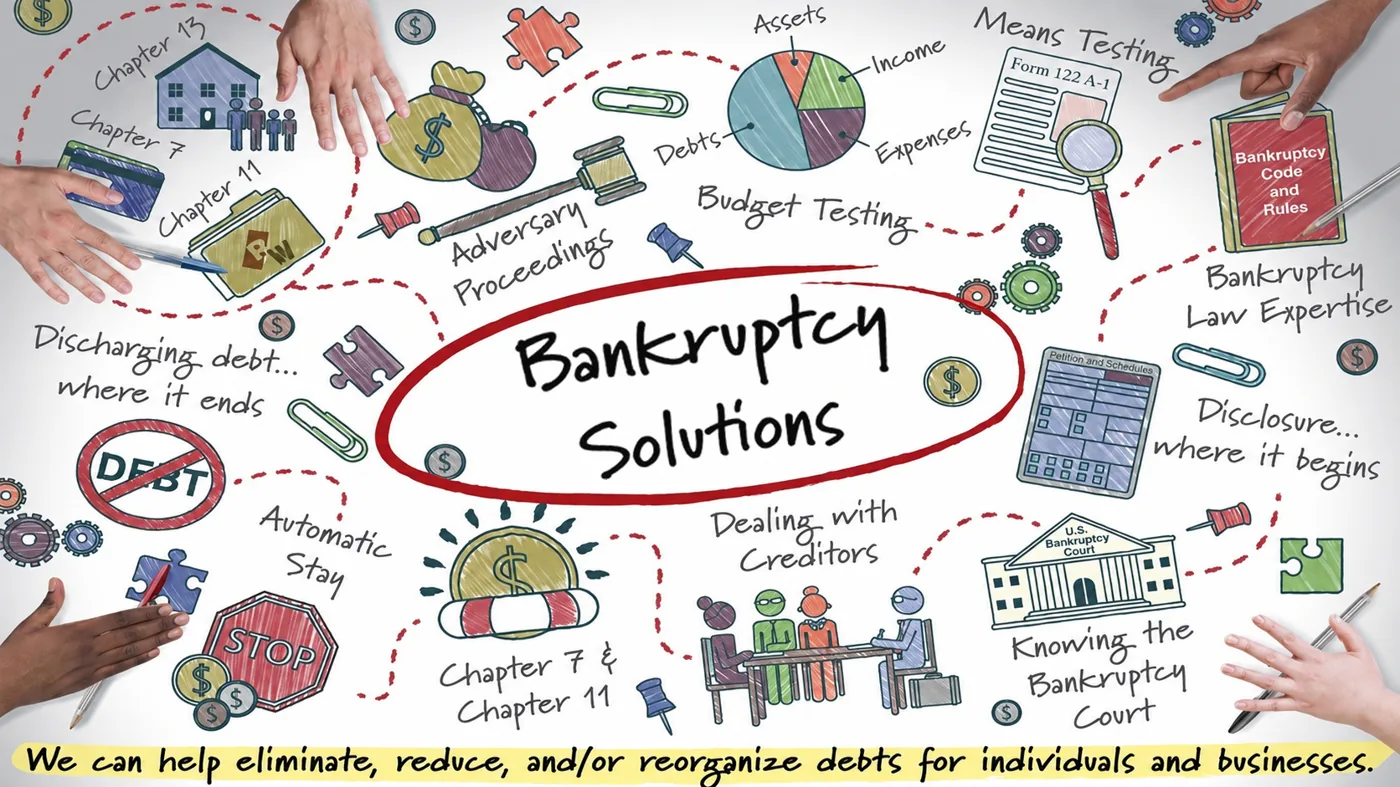
Bankruptcy Solutions illustration

Eliminate, reduce or reorganize your debt

We can help eliminate, reduce, and/or reorganize debts for individuals and businesses.

  • Erase most qualifying debt
  • Negotiate a settlement without filing
  • Reorganize under a court-approved plan

How personal bankruptcy works on Long Island

Filing pauses collection; your chapter decides the debt

U.S. Bankruptcy Court illustration

Personal bankruptcy is a case in federal court. The moment the petition is filed, a legal hold called the automatic stay generally halts collection: the calls, the lawsuit, the garnishment, a bank restraint or a foreclosure sale.

That hold is what people mean by "bankruptcy protection," and it lasts while your case is open.

The chapter decides what happens to the debt. Chapter 7 erases most qualifying debt. Chapters 13 and 11 restructure what you owe into a plan the court approves. Each aims at a discharge: a court order ending your personal liability for the debts it covers.

Every case from Nassau County or Suffolk County goes to the Eastern District's courthouse in Central Islip. Long Island's two counties filed 5,049 of them in the 12 months to June 30, 2026, about 44% of the district's total.

So the first question isn't which chapter. It's which way out fits your debts, and that is where the table below starts.

Legal Debt Resolution

Filing is common on Long Island, and there's no judgment here.

Ways out of debt a Long Island bankruptcy attorney can offer

Four ways out of debt, with the court's own numbers

Seesaw illustration

Most people who call haven't chosen a chapter, and they don't need to. Choosing first is how a filer ends up in a Chapter 7 that puts home equity at risk, or in a Chapter 13 plan their income can't carry to the end.

Here is how the four routes compare on the points that usually decide it.

RouteWho it fitsWhat it does to the debtHow longCourt filing fee (as of 2026)Debt limitIts page
Chapter 7Mostly unsecured debt, and income that passes the means testErases most qualifying debt; a trustee can sell only property your exemptions don't coverUsually a few months to the discharge$338, payable in up to four installments, or waived under 150% of the poverty lineNonechapter 7 attorney
Chapter 13Regular income, plus a home or car to keep or missed payments to catch upReorganizes debt into one court-approved repayment plan, built around keeping propertyUsually 3 to 5 years of plan payments$313, payable in installments with the court's approvalUnder $2.75 million, secured and unsecured combinedchapter 13 lawyer
Chapter 11 / Subchapter VA business that needs to keep operating; individuals can file it tooReorganizes debt under a plan creditors vote on, while the business usually keeps runningSet by the plan; Subchapter V plans run 3 to 5 years$1,738Subchapter V: $7.5 millionchapter 11 attorney · sub-chapter v attorney
Negotiated settlementDebts a creditor may settle without a court caseCreditors agree to take less, or to take it over time; no court order and no automatic staySet by each agreementNone: there is no court caseNonenegotiating debt instead of filing

The filing fees are the court's, as of 2026, and separate from what we charge. The debt limits are for cases filed on or after November 10, 2026.

Chapter 7 also has an income test, the means test, and its page sets out the line.

A route isn't locked in once chosen. A Chapter 13 filer can convert the case to Chapter 7, and a Chapter 11 debtor generally has a one-time right to do the same.

What each route asks of you

  • Chapter 7: a full list of what you own and owe, a meeting with the trustee and a short money-management course before the discharge.
  • Chapter 13: years of steady plan payments, and a word with the trustee before you take on new debt.
  • Chapter 11 and Subchapter V: running the business under court oversight, with regular reports on its finances.
  • A settlement: money for what you agree to pay, in one sum or over time. With no stay in place, a creditor can keep pressing a lawsuit while you talk.

The last row is one we can offer honestly because we're a real law firm, not a settlement company. If a creditor won't deal, we can still file or defend the lawsuit.

Chapter 11

Choose the route after you've seen all four, not before.

Bankruptcy help in every county and borough we serve

Pick your county or borough for its court and office

Both Long Island counties file at one courthouse; the five boroughs split between the Eastern District in Brooklyn and the Southern District in Manhattan. Each page below works through its own court, office and local numbers.

Nassau County

Central Islip court; Mineola office by appointment.

Nassau County bankruptcy lawyer

Suffolk County

Central Islip court; Melville and Bohemia offices.

Suffolk County bankruptcy lawyer

New York City

Brooklyn or Manhattan court, depending on your borough.

bankruptcy help in New York City

Brooklyn

Brooklyn court; Brooklyn office by appointment.

bankruptcy help in Brooklyn

Queens

Brooklyn court; Forest Hills office by appointment.

bankruptcy help in Queens
New York State illustration

The cost of starting a bankruptcy on Long Island

Your first conversation with Ron costs nothing

The consultation is free: genuinely free, not credited toward a fee later.

After that, the fee follows the chapter. Chapter 13 attorney fees are typically built into the court-approved repayment plan. For other case types, we use flat-fee pricing and flexible payment plans.

The court's filing fee is separate from ours and sits in the table above. For a fuller breakdown, read what bankruptcy costs.

Every cost is disclosed in a written agreement before you sign anything.

Book My Free Consultation

Our legal consultations are free, but our advice may be invaluable.

Life ring and coin illustration

A Long Island bankruptcy case, from first call to discharge

The steps every chapter shares

Each chapter adds its own deadlines, and its page lists them. These six steps are common to every Long Island case.

Gears illustration
  1. Counseling.

    Before any chapter, each individual filer completes a course with an approved credit counseling agency, no more than 180 days ahead of filing.

  2. Your consultation.

    Ron goes over your income, debts and property, and we run the four routes in the table against your numbers.

  3. Petition and schedules illustration

    The petition.

    We file it at the Alfonse M. D'Amato U.S. Courthouse, 290 Federal Plaza, Central Islip, which serves both Nassau County and Suffolk County. The automatic stay starts with the filing.

  4. The schedules.

    With the petition go sworn lists of everything you own and owe, your income and your expenses. Leaving something out can put the case at risk, so we go through them with you line by line.

  5. People meeting at a table illustration

    The meeting of creditors.

    Often called the 341 meeting, it's where a trustee questions you under oath. In Chapter 7 and 13 cases filed there since October 1, 2023, it runs on Zoom, and we prepare you beforehand.

  6. Crossed-out debt illustration

    The finish.

    A Chapter 7 case usually reaches its discharge a few months after filing. In Chapter 13 and 11, a judge decides whether to confirm the plan, and you then make the payments it sets.

Your chapter's own page has the rest: the paperwork deadlines, the documents the trustee wants and the course that comes before a discharge.

The chapter changes the ending, not the first steps.

An older couple smiling over coffee at home, relaxed

Bankruptcy is the most effective way to deal with debt.

Book My Free Consultation

What personal bankruptcy stops, and what you can keep

What stops on filing day, and what New York protects

Stop sign illustration

The automatic stay is the part of filing you feel first. From the moment the petition is filed, creditors generally have to stop:

  • Calls and letters demanding payment.
  • Collection lawsuits, new or already running.
  • Wage garnishments and bank restraints.
  • A foreclosure sale, as long as you file before it happens.

One caution: a bankruptcy of yours dismissed within the past year can mean less protection this time, so tell us about any earlier case.

When a sale date or a garnishment can't wait, the petition can go in as an emergency filing, in 24 to 48 hours, or on the day itself if a sale is that close.

What you keep

Castle illustration

What a filing leaves you is set mostly by exemptions. Nassau County and Suffolk County share New York's highest homestead amount: $204,825 of equity in the home you live in, as of April 1, 2024, whether a house, co-op, condo or mobile home.

Equity above that is where the chapter matters. In Chapter 7, a trustee can sell what the exemptions don't cover. In Chapter 13, extra equity raises the minimum your plan must pay unsecured creditors.

Missed mortgage payments follow the same split. Chapter 7 can pause a foreclosure but can't cure the arrears; a Chapter 13 plan can spread them out while you keep paying the current mortgage.

Debts work the other way around: here is which debts bankruptcy erases and which ones stay with you.

If a foreclosure is the main worry, read about bankruptcy as a way to stop a foreclosure.

Breadth of the Bankruptcy Stay

What you keep is set by the exemptions, not by your creditors.

Bankruptcy on Long Island within the Eastern District

Long Island files most of the district's Chapter 13 cases

The Eastern District of New York covers Brooklyn, Queens and Staten Island as well as both Long Island counties.

In the 12 months to June 30, 2026, it took in 11,396 bankruptcy cases. Nassau County filed 1,929 of them and Suffolk County 3,120.

Long Island leans toward Chapter 13, the chapter built around keeping property. It made up about 42% of the island's filings (2,124 cases), and the island filed about 57% of every Chapter 13 case in the district.

Chapter 11 cases were a smaller slice: 154 on the island, up from 120 the year before, while total filings rose about 3%.

Both counties are heard at the same Central Islip courthouse, and our offices follow the same map: Melville near the line between the counties, Mineola in Nassau County and Bohemia in Suffolk County.

For a Long Island filer, that means one court and one firm, whichever county you call home.

Two counties, one courthouse, and a caseload that leans to Chapter 13.

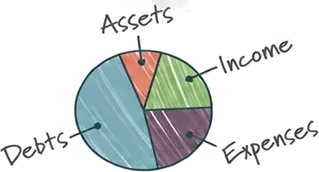
Pie graph illustration

Meet the bankruptcy lawyer behind our Long Island offices

The training behind the advice you'll get

Bankruptcy code book illustration

Ron's bankruptcy training

Ron's first post in law ran from 1988 to 1989: law clerk to U.S. Bankruptcy Judge Prudence B. Abram of the Southern District of New York.

His NYU Law training included the John J. Galgay Fellowship in Bankruptcy and Reorganization Law, and in 1989 he published a study of the bankruptcy court's contempt power (6 Bankr. Dev. J. 205).

Handshake illustration

The first meeting is with Ron

Ron handles the consultations himself, at our Melville office, another of our offices or by phone. After that, a firm attorney answers your questions directly.

Signed agreement illustration

Five departments, one team

Bankruptcy, negotiations, litigation, mortgage modifications and deal making are separate departments that work a case together. If a settlement stalls, the same firm can file or defend the lawsuit.

Sword and shield illustration

Through every downturn

The firm has worked through every major downturn of its time, from the 2008 crisis to COVID. The debts change with each one; the job of matching them to the right route doesn't.

Gavel illustration

Admitted where Long Island files

Ron was admitted in 1992 to both federal courts his clients file in: the Eastern District, which hears every Long Island case, and the Southern District. He is a member of both county bar associations, Nassau County's and Suffolk County's.

House illustration

Hablamos Español

Consultations in English and Spanish (Hablamos Español), and our team also speaks Hindi, Urdu and Russian.

Avvo 10.0 Superb · BBB A+ · Super Lawyers 2026 · Martindale-Hubbell Client Champion Platinum 2026

Court training up front, and every route in one firm behind it.

Personal bankruptcy consultations, every route compared

Your own debts, set against all four routes

Tell us what you owe, what you earn and what you want to protect. Ron tells you which of the four routes your situation supports, including no filing at all, and why.

Same-day consultations are available. If a sale date, a garnishment or a lawsuit is already in motion, say so when you call, because it changes how fast we move.

We review your problem with possible solutions, and we arrive at a solution that meets the challenges of your specific facts.

Creative Legal Solutions to Your Debt Challenges video

What Long Island bankruptcy clients ask before they file

Four signals point the way:

  • Debt that's mostly cards, medical bills and loans, with an income the means test allows: Chapter 7.
  • A steady paycheck, and a house or car with missed payments that you want to keep: Chapter 13.
  • A company with payroll, rent and creditors pressing: Chapter 11, or Subchapter V for a smaller business.
  • Debts a creditor may settle, with no lawsuit or sale you need stopped today: a negotiated settlement.

Seeing yourself in two of these is exactly what the consultation is for. For the routes that don't involve a court, read alternatives to bankruptcy in New York.

Speak with a Long Island bankruptcy lawyer

Ready to compare your ways out of debt?

One call, any hour, books your time with Ron. You'll see which route your numbers support, and every cost goes in writing before anything is filed.

Available 24/7.

↑ Top